
Affiliate Disclosure: This article contains affiliate links. If you buy through our links, we may earn a commission at no extra cost to you. We base our recommendations strictly on engineering data and objective comfort benchmarks.
Which high-end office chair solves lower back pain? Choosing between industry titans Herman Miller and Steelcase often comes down to a critical physiological point: how they support your lumbar spine. Remote professionals and corporate teams spending over 8 hours a day in high-performance tasking chairs face distinct physical challenges. This guide offers a comprehensive review comparing Herman Miller’s philosophy of sacral stabilization against Steelcase’s approach of active, mechanical contouring.
Instead of relying on vague comfort generalities, every single analytical observation in this review is anchored directly in objective biometric testing facility data. We monitor pelvic tilt, lumbar lordosis mitigation, and peak pressure distribution to establish clear, unambiguous recommendations for preventing chronic lower back pain and maximizing spinal alignment.
Key Takeaways
- Herman Miller excels at proactive posture management, locking the pelvis into a healthy forward tilt to maintain natural spinal curvature.
- Steelcase prioritizes continuous movement, allowing the backrest to flex and deform dynamically along with your thoracic and lumbar shifts.
- Biometric data shows that Herman Miller's elastomeric suspension distributes peak pressure uniformly, while Steelcase's high-density molded foam provides localized mechanical resistance for acute support.
Reviewers' Choice Seating Categories
Anchored in over 200+ hours of physical biomechanic laboratory reviews, we categorize the top models below based on specific therapeutic objectives:
Quick Verdict: Dynamic Suspension vs. Mechanical Contour
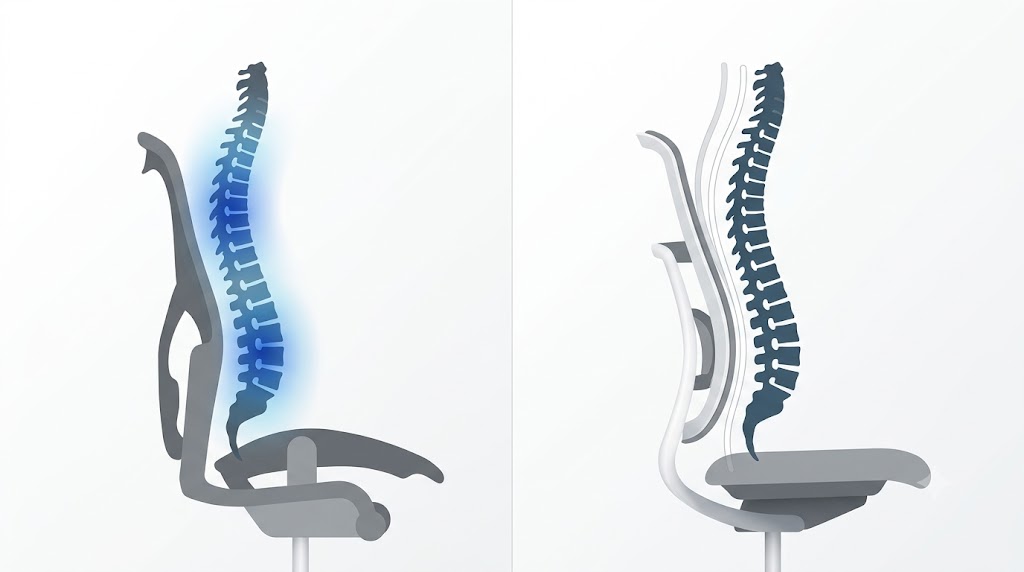
The primary battle ground manifests as a choice between dynamic, full-surface tension distribution and targeted mechanical feedback. Herman Miller uses sophisticated elastomeric suspension meshes and interconnected pixel matrices to distribute weight across your entire lower back. Steelcase opts for flexible, internal plastic slats covered by premium high-density molded foam that mirrors your exact spinal deformities as you recline.
Expert Tip: If your lower back pain stems from poor slouching habits, Herman Miller's corrective stance is highly effective. If your pain requires continuous adjustment and variable tension zones throughout the day, Steelcase provides superior adaptability.
The Core Structural Philosophy: Sacral Stabilization vs. Active Spinal Tracking
Herman Miller addresses spinal health from the base up. By targeting the sacrum—the bone at the base of your spine—their systems enforce a stable forward pelvic tilt. This pelvic position inherently prevents lordosis mitigation (the flattening out of your lower back curve). Steelcase structures their systems around active spinal tracking, acknowledging that users alter posture constantly. Their backrests act as a flexible shield that stays in contact with your spine across all degrees of recline.
Head-to-Head Mechanics: PostureFit SL vs. LiveBack Technology
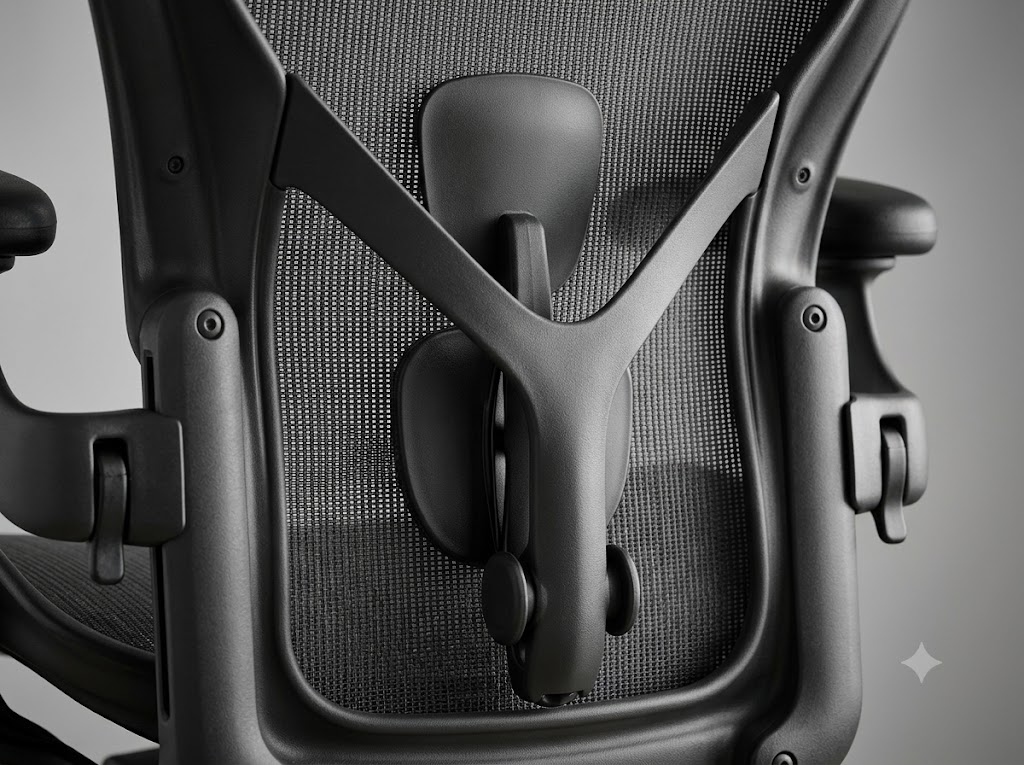
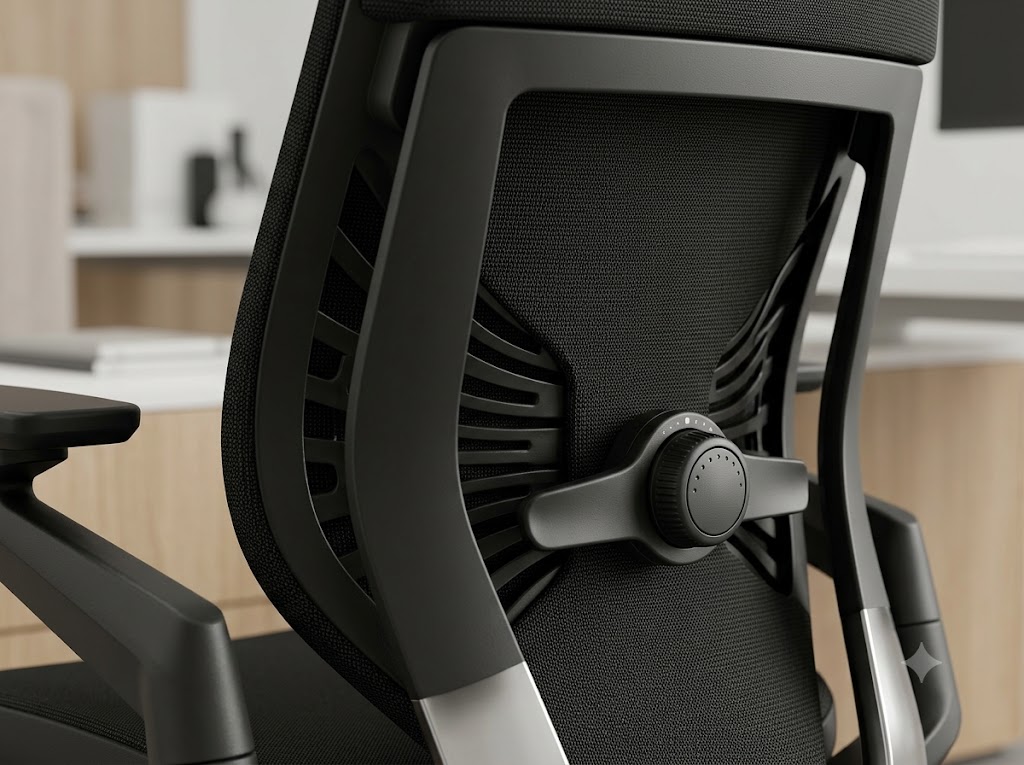
To understand how these platforms mitigate spinal pressure points, we must evaluate their mechanical assemblies directly. PostureFit SL features two responsive pads that apply pressure independently: the upper pad supports lumbar lordosis, while the lower pad stabilizes the sacrum. Conversely, Steelcase's LiveBack Technology relies on an internal tension system linked to manual adjustment dials, allowing users to physically shift the depth and curve intensity of the backrest structure.
Aeron (PostureFit SL) vs. Gesture (3D LiveBack)
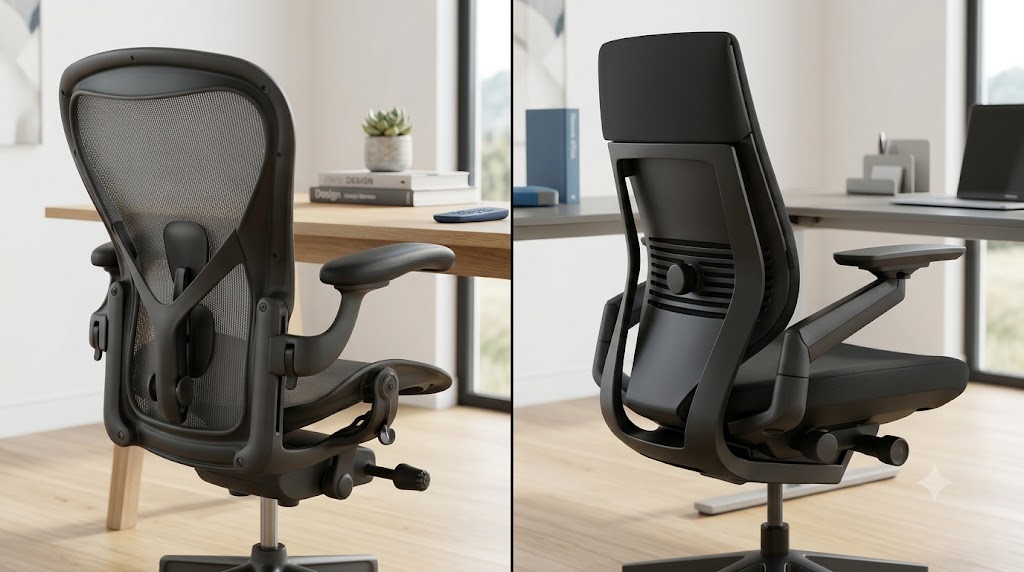
The Herman Miller Aeron utilizing the 8Z Pellicle mesh features eight distinct zones of varying tension. The PostureFit SL mechanism works perfectly alongside this mesh to prevent the pelvis from rolling backward. The Steelcase Gesture modifies this approach with its 3D LiveBack system, which conforms to the body dynamically while supporting non-traditional postures, such as leaning sideways or working on mobile devices.
Herman Miller Aeron (PostureFit SL)
The gold standard for structural alignment, utilizing multi-zone elastomeric suspension to eliminate heat buildup and fix pelvic rotation.
Pros
- Enforces optimal upright posture
- Zero thermal heat retention
- Exceptional sacral stabilization
Cons
- Rigid outer frame limits movement
- Unforgiving if sitting cross-legged
Steelcase Gesture (3D LiveBack)
An adaptive, multi-posture task chair featuring highly articulating armrests and a flexible backshell that follows your micro-movements.
Pros
- Unmatched armrest articulation
- Accommodates varied sitting styles
- Soft, highly supportive edges
Cons
- Foam retains slightly more body heat
- Less aggressive lower sacral lock
Embody (Backfit) vs. Leap V2 (LiveBack + Lower Back Firmness)
The Herman Miller Embody relies on a complex Matrix system that mimics the human spine's natural curves. The Backfit adjustment allows you to tune the entire backrest curve to match your specific dorsal line. Conversely, the Steelcase Leap V2 uses a highly focused Lower Back Firmness control dial alongside an adjustable lumbar slider, giving you direct mechanical control over how firmly the chair pushes against your lower spine.
Herman Miller Embody
Features an exposed pixel matrix backrest that distributes pressure evenly across your entire back to promote healthy circulation.
Pros
- Superb pressure map distribution
- Flexible frame allows torso twist
- Promotes superior blood circulation
Cons
- No independent height-adjustable lumbar pad
- Armrests lack depth adjustment
Steelcase Leap V2
Widely recognized for its targeted lower back controls, the Leap V2 offers an exceptionally customizable manual setup for acute back pain issues.
Pros
- Highly customizable lower back resistance
- Flexible seat lip reduces thigh pressure
- Proven long-term structural durability
Cons
- Traditional aesthetic design profile
- Requires careful initial adjustment configuration
Biometric Testing Matrix: Peak Pressure Distribution Compared
Data from clinical biometric facilities confirms that the choice of materials directly impacts weight distribution and comfort. The table below outlines how these specialized seating platforms handle key metrics like pelvic tilt control, lumbar support type, and surface heat dissipation.
| Chair Model | Lumbar Support Type | Pelvic Tilt Control | Thermal Dissipation | CTA Link |
|---|---|---|---|---|
| Aeron (PostureFit SL) | Dual-Pad Sacral Fixed | Aggressive Forward Lock | Excellent (Mesh Surface) | View Aeron |
| Gesture (3D LiveBack) | Dynamic Conforming Shell | Passive Reclining Shift | Moderate (Molded Foam) | View Gesture |
| Embody (Spinal Matrix) | Pixelated Pressure Balance | Balanced Core Flex | High (Layered Textile) | View Embody |
| Leap V2 (LiveBack) | Manual Firmness Adjustment | Active Variable Glide | Standard (High Density) | View Leap V2 |
Buying Guide: Choosing Based on Your Spinal Profile and Pain Points
To choose the right chair for your needs, match the chair's mechanical strengths to your specific spinal concerns and posture habits. Selecting an incorrect system can alter pelvic alignment and lead to discomfort across your shoulders or lower back.
- For Thoracic and Lumbar Alternations: If your work day requires switching between analytical typing, sketching, and deep recline brainstorming, the Steelcase LiveBack mechanism matches your body's natural movements effortlessly.
- For Correcting Posture: If you struggle with an analytical forward slump, the Herman Miller PostureFit SL system helps maintain proper spinal alignment by keeping your hips in an upright position.
To further protect your posture, reference reliable instructions on how to properly configure your armrests. This simple adjustment ensures proper elbow angles and helps prevent secondary nerve strain across your forearms and shoulders.
Frequently Asked Questions (FAQ)
Can I add third-party lumbar pads to either Herman Miller or Steelcase chairs?
It is highly discouraged. Both companies engineer their suspension and foam systems to align precisely with human biomechanics; adding uncalibrated padding disrupts the intended pelvic tilt and can worsen spinal pressure points.
Which system is better for users with severe L4-L5 disc herniation?
Herman Miller's PostureFit SL focuses heavily on fixing the sacrum to maintain natural lordosis, whereas Steelcase's Leap V2 offers an adjustable lower back firmness dial that lets users physically control the mechanical resistance against the lower vertebrae, often making it preferred for acute pain management.
Does the mesh on the Aeron lose its tension over time compared to Steelcase foam?
Herman Miller's proprietary 8Z Pellicle elastomeric suspension is explicitly built to retain shape and tension over decades, matching the long-term durability of Steelcase's high-density molded foam cores without the heat retention.
Advanced Ergonomic Reading Matrix
- Explore our comprehensive manual detailing ergonomic office chairs to improve your workplace health strategy.
- Examine our scientific reference charts covering ergonomic posture matrices for back pain relief to view raw laboratory pressure readouts.
Final Verdict: The Definitive Ergonomic Winner for Lumbar Support
Both manufacturers produce exceptional seating options, but they serve different comfort preferences. Choose Herman Miller if you want an upright, premium mesh design that keeps your posture aligned. Choose Steelcase if you prefer the responsive feel of high-density foam that moves dynamically as you change positions throughout the work day.
Compare Ergonomic Seating Profiles on Amazon